A robot mower is one of the few household machines that pays you back in time every single week. The difficulty is that most published recommendations are written for open, flat, American-style lawns — not for a 420 m² garden in Lyon with a gravel path through it, or a sloping plot outside Malmö that stays damp until June.
We install every mower ourselves, map it from scratch, and then leave it to work unsupervised for at least six weeks. What follows is what survived that.
How to choose a robot mower in Europe
Start with lawn area, then slope, then complexity. Manufacturers quote maximum area in ideal conditions; in practice, budget around 30% more capacity than your measured lawn if it is split into zones or has obstacles.
Wire-free RTK models need a clear view of the sky for the reference antenna. Dense mature trees, tall buildings on a narrow plot, or a courtyard garden can all be reasons to prefer a wired or hybrid system.
- Under 500 m², simple shape: a compact wired or entry-level RTK model is plenty
- 500–1,500 m² with zones: wire-free RTK with vision assistance
- Slopes above 35% or terraces: all-wheel drive
- Shaded or built-up plots: wired boundary, or RTK with a well-placed antenna
Noise, neighbours and European garden sizes
European gardens are usually close to someone else's. Several countries and municipalities restrict machine noise on Sundays and during midday quiet hours, so a mower at 58 dB(A) is not a specification detail — it decides whether you can run it during the day at all.
Installation is the part people underestimate
Every wire-free mower in this guide took us between 90 minutes and half a day to install and map properly, including antenna placement and defining no-go zones around flower beds and irrigation heads. Rushing this stage is the single most common reason people conclude a robot mower 'does not work'.
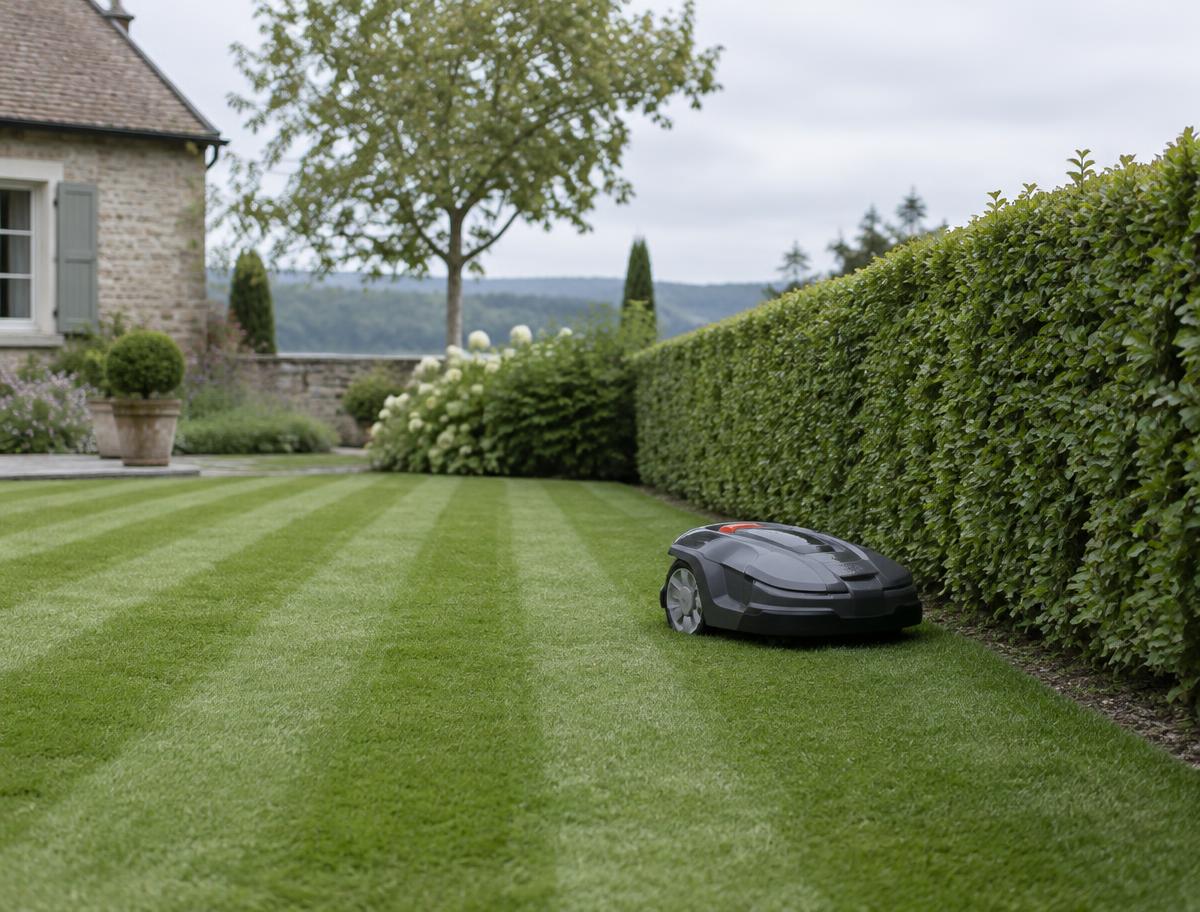 Best overall