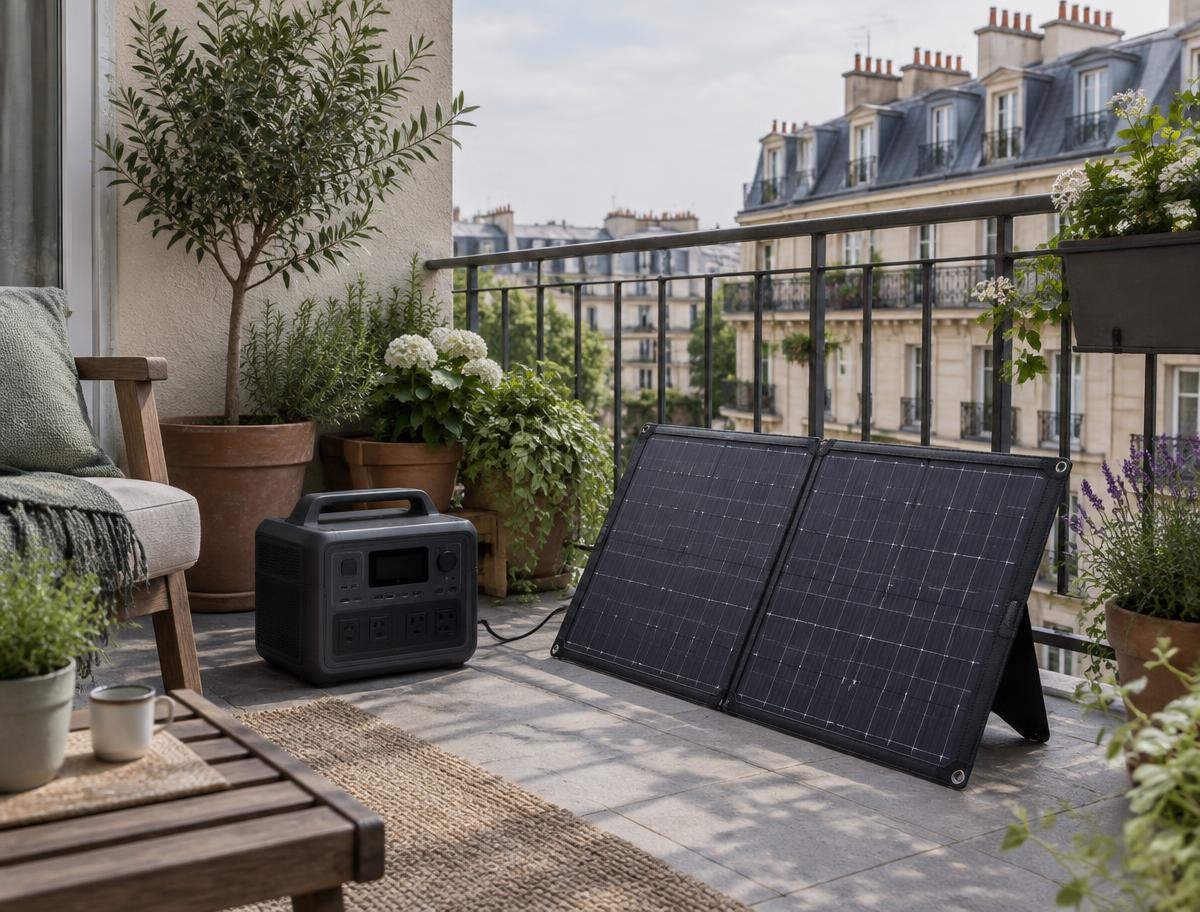
Home Energy

Balcony solar, home batteries and portable power stations assessed against European tariffs, 230 V appliances and national grid rules.

Portable power stationsBalcony solarSolar panelsHome batteriesBackup powerEnergy monitoringPortable solar panels

Our picks in home energy

EcoFlow DELTA 3 Plus

1. EcoFlow

EcoFlow DELTA 3 Plus

A 1 kWh LiFePO4 station with fast charging and a 230 V output that copes with real household appliances.

Capacity
1,024 Wh (expandable)
AC output
1,500 W (2,200 W surge)
Cells
LiFePO4, 4,000 cycles
Solar input
500 W
Sockets
Schuko, 230 V / 50 Hz
Weight
12.5 kg

Pros

  • Very fast AC recharge
  • Quiet in eco mode
  • Expandable with extra batteries

Cons

  • Fans ramp up under heavy load
  • App occasionally slow to reconnect

Typical price €649 – €899 · Availability Excellent across the EU

Where to buy

BLUETTI AC180

2. BLUETTI

BLUETTI AC180

Slightly slower to charge than its rival, but often the cheaper route to a dependable 1 kWh backup.

Capacity
1,152 Wh
AC output
1,800 W (2,700 W surge)
Cells
LiFePO4, 3,500 cycles
Solar input
500 W
Sockets
Schuko, 230 V / 50 Hz
Weight
16 kg

Pros

  • Higher continuous output
  • Frequently discounted
  • Simple, readable display

Cons

  • Heavier
  • No expansion battery

Typical price €599 – €799 · Availability Good: DE, FR, NL, PL

Where to buy

Anker SOLIX Solarbank 2

3. Anker SOLIX

Anker SOLIX Solarbank 2

The most straightforward way to store balcony solar output and use it in the evening.

Storage
1.6 kWh (expandable to 9.6 kWh)
Micro-inverter
Integrated, 800 W
Inputs
4 × MPPT
Protection
IP65
Compliance
VDE-compliant 800 W feed-in

Pros

  • Simple plug-in installation
  • Meets the German 800 W limit out of the box
  • Clear consumption data

Cons

  • Heavy to lift onto a balcony
  • Needs a smart meter for best savings

Typical price €999 – €1,399 · Availability Strong in DE, AT, NL; growing elsewhere

Where to buy

4 guides & reviews

Home Energy · Buying guide

Best Balcony Solar Batteries

Balcony solar produces at midday and you use power at night. A battery closes that gap — if the sums work.

Katrin Bauer · Updated 16 September 2026 · 10 min read

Explore other categories